Archive | July, 2012

School and Calendars Are ADHD BFF

What The Research Says About Calendars

Did you know that…

Carry a Calendar with You

Having and using a daily calendar has a major impact on whether students will meet their daily responsibilities like getting to appointments and completing homework and chores!

Researchers taught a group of high school student to have and to use a calendar. Prior to the study students were getting very few of their responsibilities done (0% to 37%).

First, the students were allowed to pick out the calendar they liked and then asked to carry it every day.

If they had their calendar with them when the researchers asked, they got a point. The students had to be able to carry their calendars 5 days in row before they were ready for the next phase of the study.

When they learned the habit of carrying their calendar, they were then taught to write down their daily schedule including school assignments, chores, and appointments. The researchers then did daily spot checks to see if students had their calendars and had written everything down.

They were expected to do both of these tasks 5 days in a row and were given two points for accomplishing these tasks.

In the third phase of the study the researchers counted how many of the responsibilities written in the calendar the students actually completed each day. In this phase of the study, all the students improved dramatically in meeting their responsibilities: they completed 80% to 100% of their responsibilities.

So, just owning, carrying, and writing in a daily calendar can dramatically improve your ability to do what you need to do and get to appointments.

You can conduct a similar study on yourself.

  • Pick out a time management tool that matches your needs and your style. There are so many choices beyond paper planners: PDAs, on line calendars, software calendars, etc.
  • Look at the week before you started carrying and using a calendar and count how many of your responsibilities you met.

Then follow the phases used in the study:

Phase 1: just remember to have your calendar with you each day. Give yourself a point if you did. Once you have kept your calendar with you for 5 days in a row you are ready for phase 2.

Phase 2: now practice keeping your calendar. Include your assignments, studying, social engagements, chores etc. Give yourself 2 points a day if you both, had your calendar and wrote everything in it. When you have done this 5 days in a row you are ready for phase 3

Phase 3: at the end of each day count up how many of your responsibilities you met. Calculate the percentage of things you accomplished by dividing the total number of responsibilities into the actual number of those you met. How much have you improved from before you began using a calendar?

What do you need to do to keep in the habit of having and using your calendar?

Consider making an agreement with a friend to check on one another or work with a staff member from the Learning Center.

Flores, D. M., & Schloss, P. J. (1995). The use of a daily calendar to increase responsibilities fulfilled by secondary students with… Remedial & Special Education, 16(1), 38.
 
Submitted to me by a client with calendar challenges. Reprinted in entirety.
 
Maureen Nolan, Your Attention Coach
maureen@yourattentioncoach.com


Continue Reading

Head Injury and ADHD

Early Head Injury Plagues Life

In the early ’60’s my family moved to Atlanta from Ohio. A year later we were traveling back north to visit family, driving on a two-lane highway just outside of Nashville, TN. A blinding southern rainstorm hit just before we were to drive over a ravine. Skidding on the unfamiliar road, the car hit head-on into another car just as we approached the bridge.

All five of us were injured: my sister in the front passenger seat hit the windshield but her seat belt saved her life. My mother slammed into the steering wheel, losing her spleen. Lying flat in the station wagon back, my father and younger sister broke their backs sliding in to the back of the front seat. I snapped my head into the metal ridge back of the front seat, breaking my nose.

Head injury wasn’t really understood the way it is in this decade. I now know I suffered a head trauma as probably did my father and both sisters. Since I was already a classic hyperactive ADHD child (undiagnosed) it may have been hard for anyone to notice a difference. Or, in a morbid way maybe all of us were similarly injured so who could tell the difference?

What Is the Treatment for Head Injury?

How Do You Turn It Back On?

This is where I am in my journey. How can I treat an old head injury? Clients ask for alternative resources for ADHD treatments in the Atlanta area. Where can they go? What kind of treatment is available that doesn’t include pharmaceuticals? Other than coaching and western medicine what can I, as a coach practitioner recommend? This is a challenge as there are no guarantees in service. So, I do not make recommendations to some of the new brain therapies springing up around the city. Personal research-based recommendations are the only ones I’ll suggest.

This week I was drawn to visit Dr. Gedaliah Genin, a Marma practitioner in Atlanta, Ga. Quite separate from the reason I sought her services, at the end of the session she asked if I had had a head injury. Stunned by her question, I recalled for her the family trip story and my injury. She shared that I had disconnects in energy in my pre-frontal cortex and scattered activity in the back of my skull both of which she repaired for me energetically.

Since learning about living with ADHD, to it I may now add head injury. And while seeking treatment for one I may find some healing for both. I’m hopeful and happy that if I have to have a head injury, I live in a time when alternative brain-based, energy-based treatments are better understood and available.

Maureen Nolan
Your Attention Coach
Continue Reading

Spanking Kids Leads to Adult Mental Illnesses

Dear Readers:

I occasionally insert articles of personal interest on my blog. Below is the results of a research study on spanking. This one speaks to my heart as I was spanked and slapped as a child. And as I look back over my life, I realize I have been attacked in one physical way or another about a dozen times. When I became the mother of a boy child who was very busy, I was told by my family that I needed to spank him. So I spanked him one time when he was about two years old.

I cried, he didn’t. I never hit him again.

I recall the old saying, pick on someone your own size if you have to pick on anyone at all. It’s a more fair match. However, I was  attacked as an adult and I was no physical match. I never expect to be attacked. I tend to think I began to emit ‘attack me’ energy after early spankings.

I was bullied when we moved to a new grammar school in a new state. Later in life, in two separate situations, I was assaulted by homeless men who grabbed and kissed me; I was sexually assaulted; I married a sex addict. Oh, and Daddy was an alcoholic.

My father would say ‘Life is tough,’ when I asked him why he was so mean.

Please, don’t spank/hit your children. Can you see how it spirals out of control?

Kindly,
Maureen Nolan

Spanking Kids Leads to Adult Mental Illnesses

By Michael Smith, North American Correspondent, MedPage Today

Published: July 02, 2012

Reviewed by Zalman S. Agus, MD; Emeritus Professor, Perelman School of Medicine at the University of Pennsylvania

Action Points
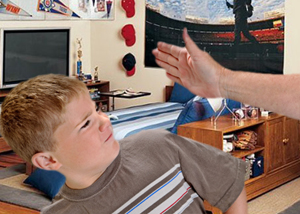
Don't Hit Your Children

  • Note that physical punishment (such as pushing, grabbing, shoving, slapping, hitting) remains a commonly used method of discipline in North America and is considered socially acceptable by many caregivers.
  • Point out that in this study, harsh physical punishment in the absence of child maltreatment was associated with mood disorders, anxiety disorders, substance abuse/dependence, and personality disorders in a general population sample of adults.

Childhood punishments such as spanking, slapping, and hitting even in the absence of full-scale maltreatment are associated with an increased risk of mental disorders in adulthood, researchers reported.

Adults who reported such punishments in their childhood had a greater risk of mood disorders, anxiety disorders, alcohol and drug abuse dependence, and several personality disorders, according to Tracie Afifi, PhD, of the University of Manitoba in Winnipeg, and colleagues.

Up to 7% of some adult disorders can be attributed to “harsh physical punishment” in childhood, Afifi and colleagues reported online in Pediatrics.

The link between child abuse both physical and sexual and mental disorders in adulthood has long been established, the researchers noted.

But studies of milder forms of punishment that had similar findings have been disputed as having “weaknesses in design, measurement, and analysis,” they added, including the lack of adjustment for confounding factors such as full-scale abuse.

To try to overcome those limitations, Afifi and colleagues turned to the National Epidemiologic Survey on Alcohol and Related Conditions, which included a representative sample of civilian, non-institutionalized adults in the U.S.

The second wave of the survey, conducted between 2004 and 2005, included 34,653 adults, 20 or older, and asked about current mental conditions, as well as the past incidence of physical punishments.

In interviews, participants were asked: “As a child how often were you ever pushed, grabbed, shoved, slapped or hit by your parents or any adult living in your house?”

Answers, on a five-point Likert scale, could be never, almost never, sometimes, fairly often, and very often. Participants who answered sometimes or higher were defined to have experienced harsh physical punishment.

For this analysis, participants who also reported severe physical abuse, sexual abuse, emotional abuse, physical neglect, emotional neglect, or exposure to intimate partner violence were excluded. The final analytic sample included 20,607 participants.

Overall, Afifi and colleagues reported, 1,258 participants reported physical punishment, or 5.9% of the total. They were more likely to be male, black, and to have a family history of dysfunction.

After adjustment for sociodemographic factors and family dysfunction, harsh physical punishment was associated with an increased risk of most lifetime Axis I mental disorders. Specifically the adjusted odds ratio for:

  • Major depression was 1.41 with a 99.9% confidence interval from 1.03 to 1.92.
  • Mania was 1.93 with a 99.9% confidence interval from 1.07 to 3.48.
  • Any mood disorder was 1.49 with a 99.9% confidence interval from 1.11 to 2.00.
  • Any anxiety disorder was 1.36 with a 99.9% confidence interval from 1.05 to 1.77.
  • Any alcohol abuse or dependence was 1.59 with a 99.9% confidence interval from 1.21 to 2.08.
  • Any drug abuse or dependence was 1.53 with a 99.9% confidence interval from 1.06 to 2.20.

Population attributable fractions ranged from 2.1% for any anxiety disorder to 5.2% for mania.

The researchers found a similar pattern for Axis II disorders, with adjusted odds ratios ranging from 1.63 for obsessive compulsive personality disorder to 2.46 for schizotypal personality disorder.

Population attributable fractions ranged from 4.2% for any cluster A disorder (paranoid, schizoid, or schizotypal) to 7.2% for schizotypal personality disorder.

The findings “provide evidence that harsh physical punishment independent of child maltreatment is related to mental disorders,” Afifi and colleagues concluded.

They cautioned that the study was cross-sectional, which precludes drawing any causal inferences. Moreover, they noted, the data was retrospective, which could introduce recall and reporting biases.

  • The study had support from the Manitoba Medical Services Foundation award, the Winnipeg Foundation, the Manitoba Health Research Council, and the Canadian Institutes of Health Research. The journal said the authors declared they had no conflicts.

Primary source: Pediatrics

Source reference:

Afifi TO, et al “Physical punishment and mental disorders: Results from a nationally representative US sample” Pediatrics 2012; 130: 19.

Michael Smith
North American Correspondent


North American Correspondent for MedPage Today, is a three-time winner of the Science and Society Journalism Award of the Canadian Science Writers Association. After working for newspapers in several parts of Canada, he was the science writer for the Toronto Star before becoming a freelancer in 1994. His byline has appeared in New Scientist, Science, the Globe and Mail, United Press International, Toronto Life, Canadian Business, the Toronto Star, Marketing Computers, and many others. He is based in Toronto, and when not transforming dense science into compelling prose he can usually be found sailing.

Continue Reading

Follow Threads of Attention: Find the Creative Beginning

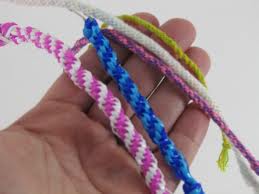
Threads Are Like Thoughts, There’s A Beginning and an End

Threads Come in Different Sizes

In my Your Attention Coach blog on Energy Transitions, the thread of thought in the article was that for people living with ADHD, even moving from room to room in a home, office, or school is a transition. And transitions are thought disruptive. You don’t have to go from house to car to forget your intention for as a client said, ‘it’s a transition for me just to turn around in a room.’

ADHD Coaching is like following threads and sometimes I hold on for dear life to a client’s thread of thought. They can be thin threads or thick cords: each has its cognitive and conversational challenges. I like to refer to these client sessions as creative.

Conversations in ADHD coaching are like fabric as some have great texture and turn in to an extraordinary garment. Some are threadbare and a client wants to learn how to fill in the spaces. Oh, and then there are the fragmented ones, the ones torn, cut, or in some way damaged. I handle those with care and delicacy.

Do Friends or Co-Workers Have Trouble Following Your Thoughts?

‘How do you think?’ I was once asked by a co-worker. Flattered for the question and the seeming attention I went on to respond at great length, somewhat distracted and certainly not providing the answer she was looking for. Finally, I asked her why she wanted to know how I thought. ‘Well, I just can’t figure out how to connect with you so you can get things done,’ she replied.

Whoa! Flattened, that meant I was difficult to work with and I felt my core fray and frazzle while I stuttered and looked away.

Does this sound like you?

That is my life before my ADHD diagnosis.

Since then, I’ve been diagnosed with ADHD, become an ADHD coach, and received coaching. I can create a coherent conversational idea now and check in with my partner to see if I’m being followed or if I need to restate my thought without beating myself up.

Does this sound like you? Can you find the beginning and end of your thought threads?

Contact Maureen Nolan, ADHD Coach and together we’ll unravel your thoughts for peace of mind and clarity in communication.

Continue Reading